15th Shanghai Biennale: Does the flower hear the bee?
Exhibition Theme: Does the flower hear the bee?
Like the flower that “hears” the bee’s wings, the 15th Shanghai Biennale aims to operate at the intersection of differing models of intelligence, both human and nonhuman. It is based on the belief that recent art provides us with a privileged space for such investigations, offering an embodied and interconnected sphere in which communities may form stronger bonds with “the more-than-human world.”
We live in a moment of great uncertainty and global emergency that has given rise to a widespread sense of disorientation. Our world is transforming at a pace that eludes our capacity for comprehension, leaving us feeling bewildered and uncertain. If a return to the past is impossible, art offers us potential pathways out of despair and malaise, helping us to find emergent forms-of-life and new modes of sensorial communication amid this instability.
Conceived in dialogue with the ideas of artists, curators, intellectuals, musicians, poets, scientists, and writers, Does the flower hear the bee? recognizes that much depends on our capacity to sense the world around us and attune ourselves to its diverse array of intelligences. Its hopeful vision rests on art’s ability to orient us towards an unknown future.
Exhibition Design: Walking a Garden-Like Landscape
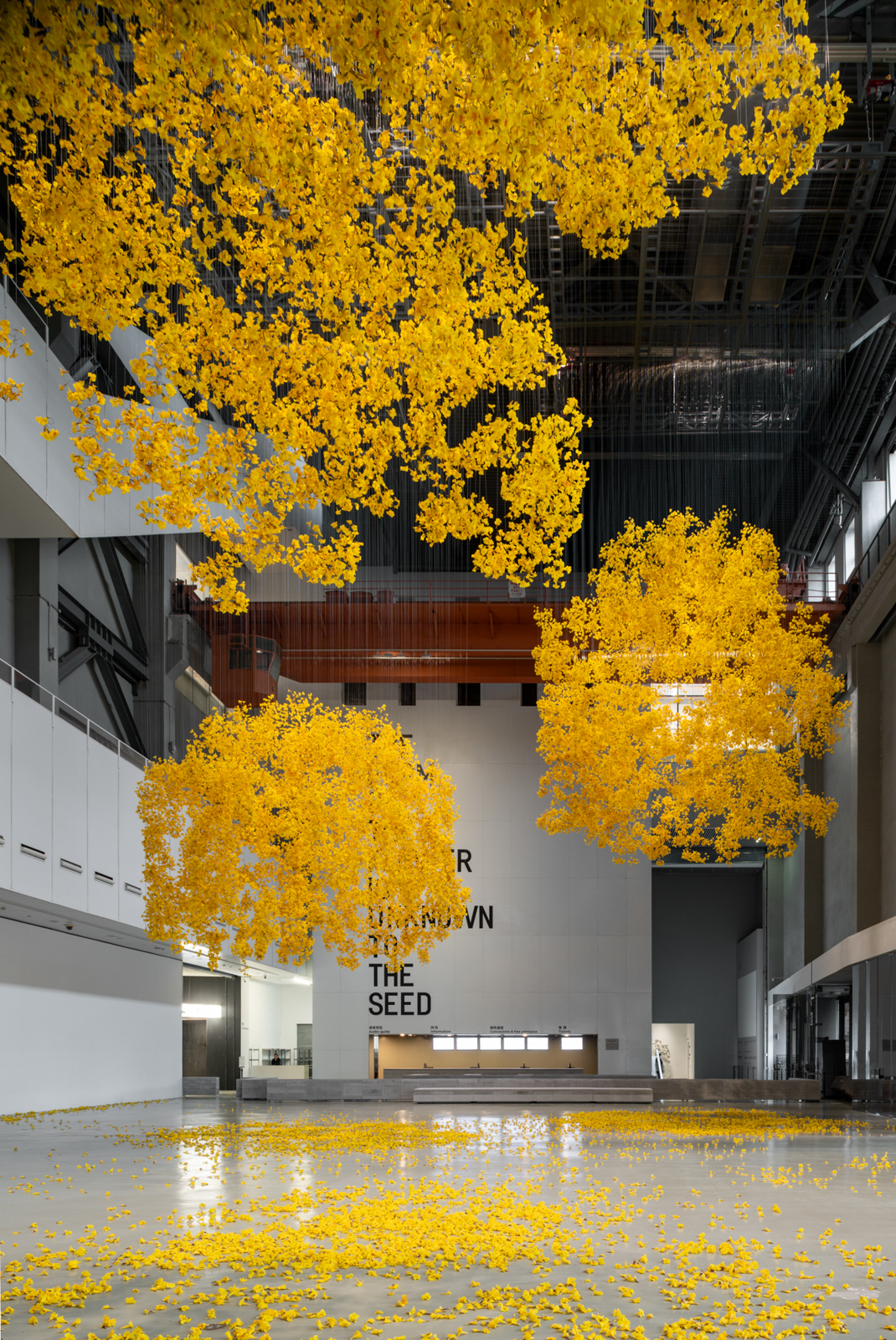
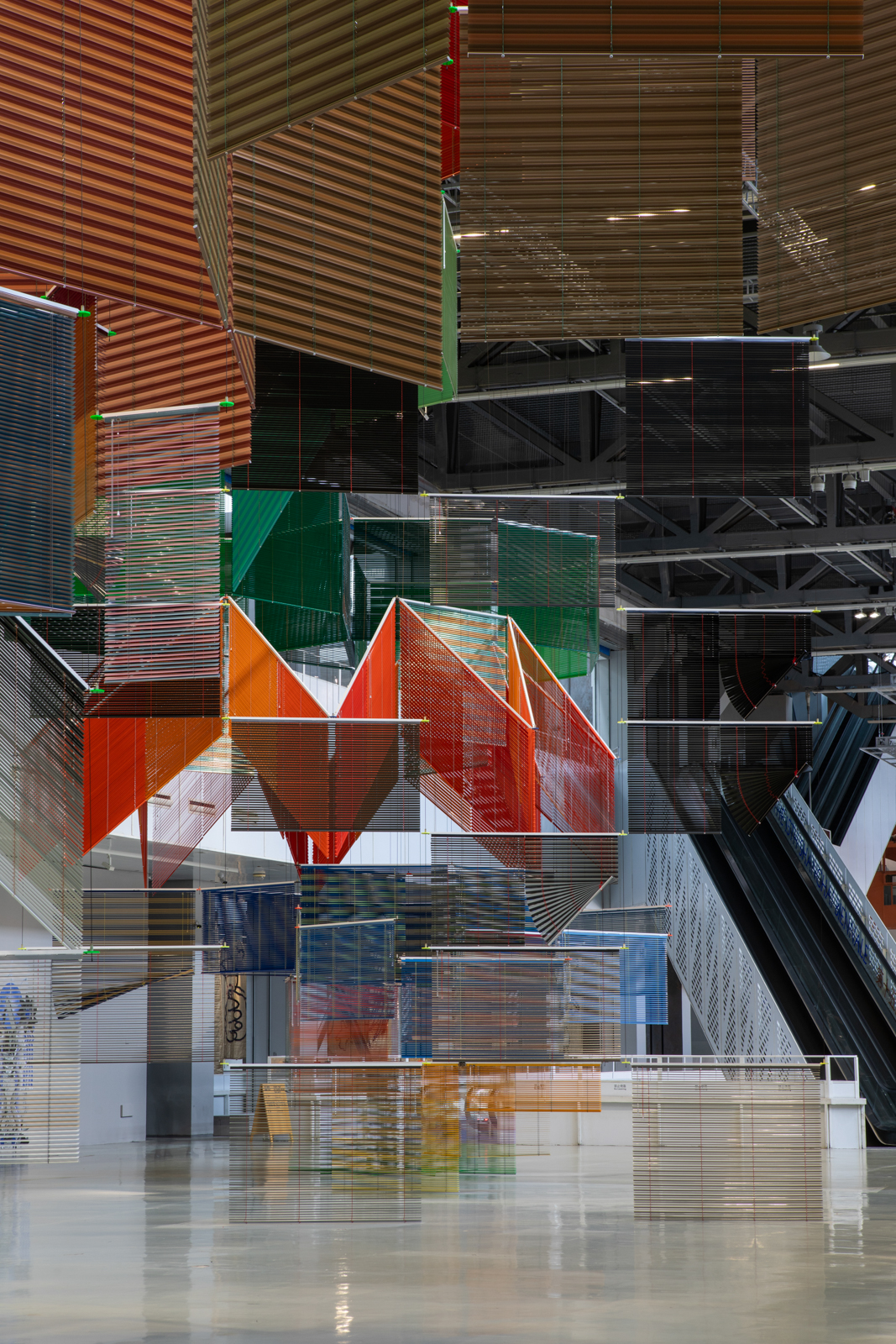
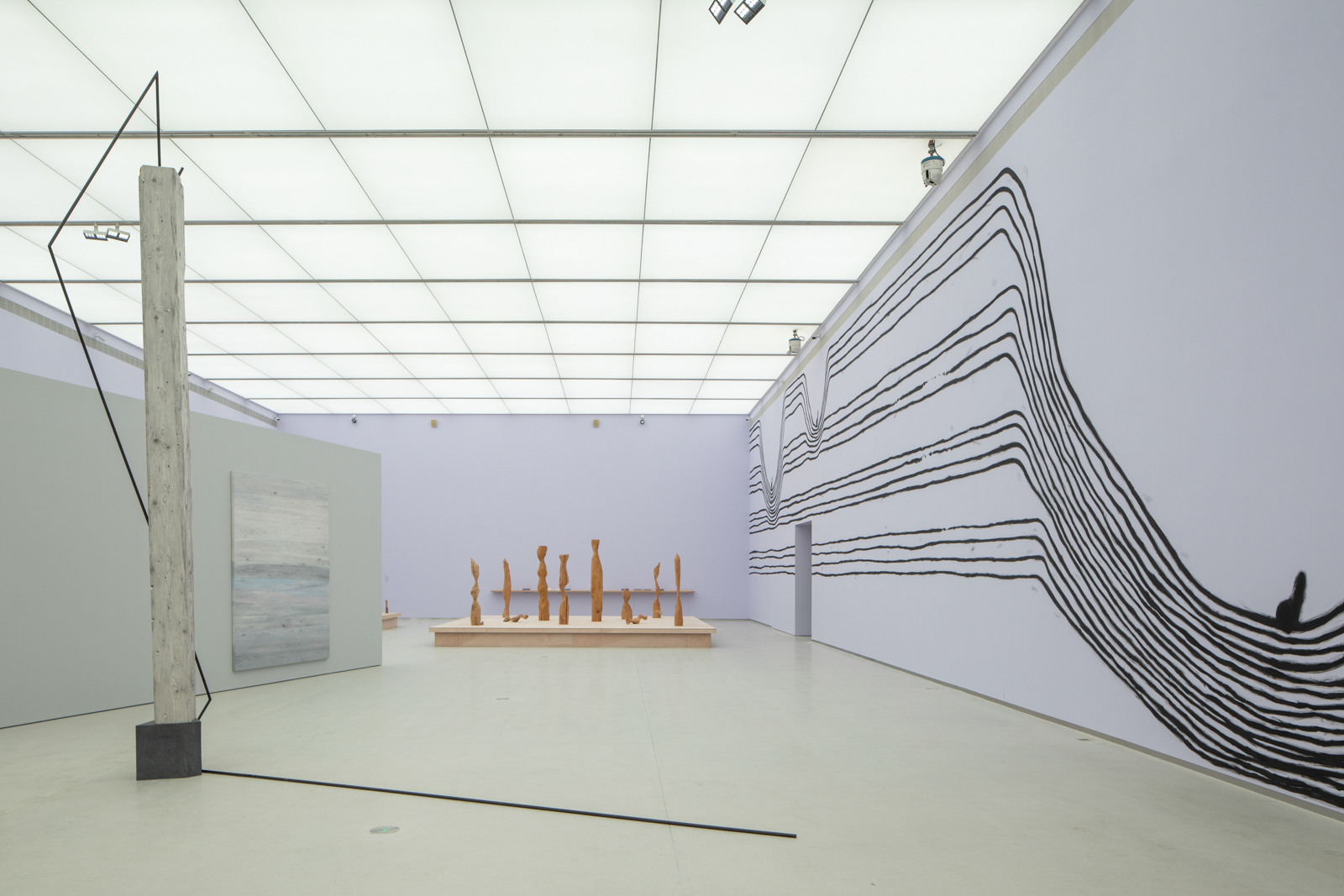
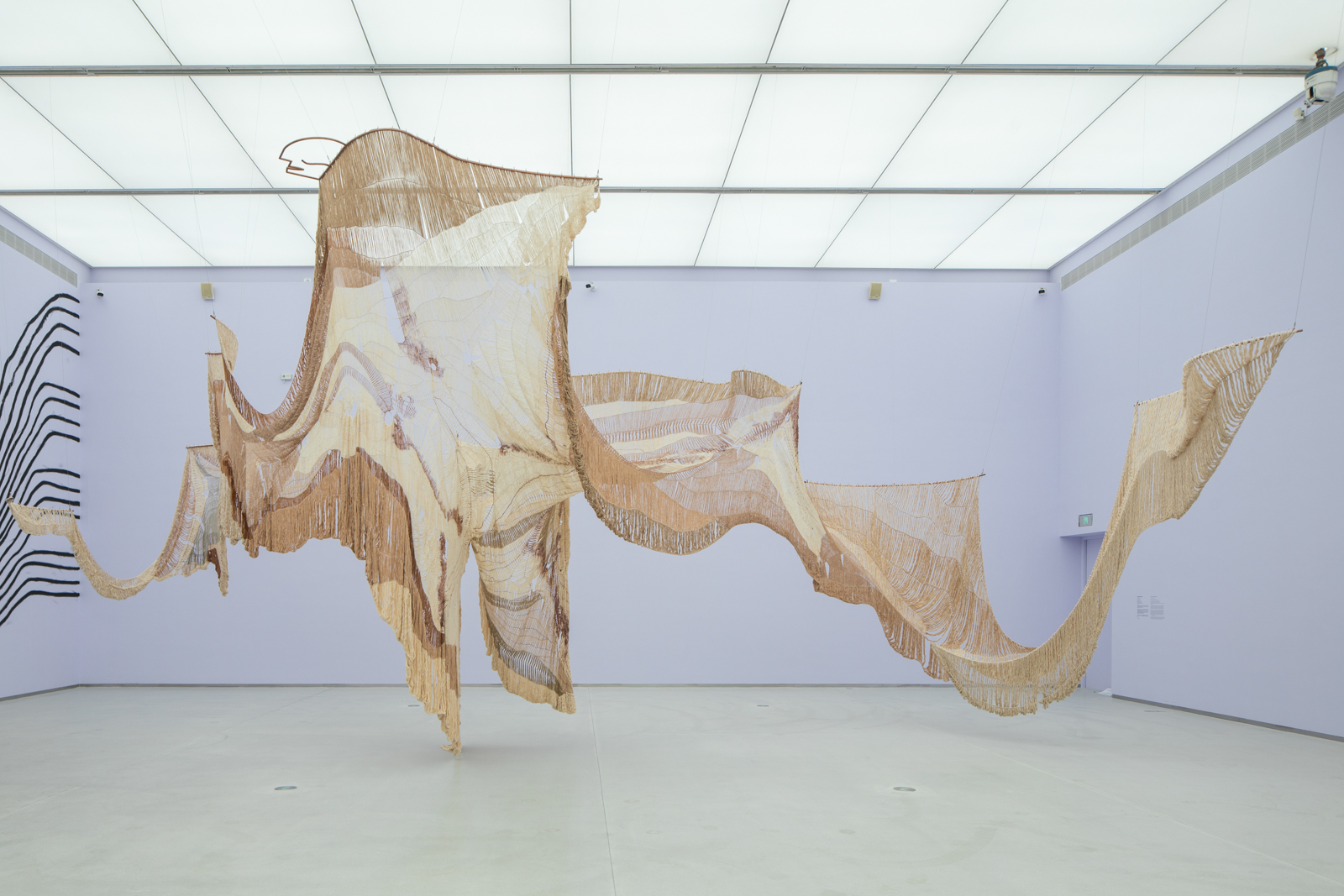
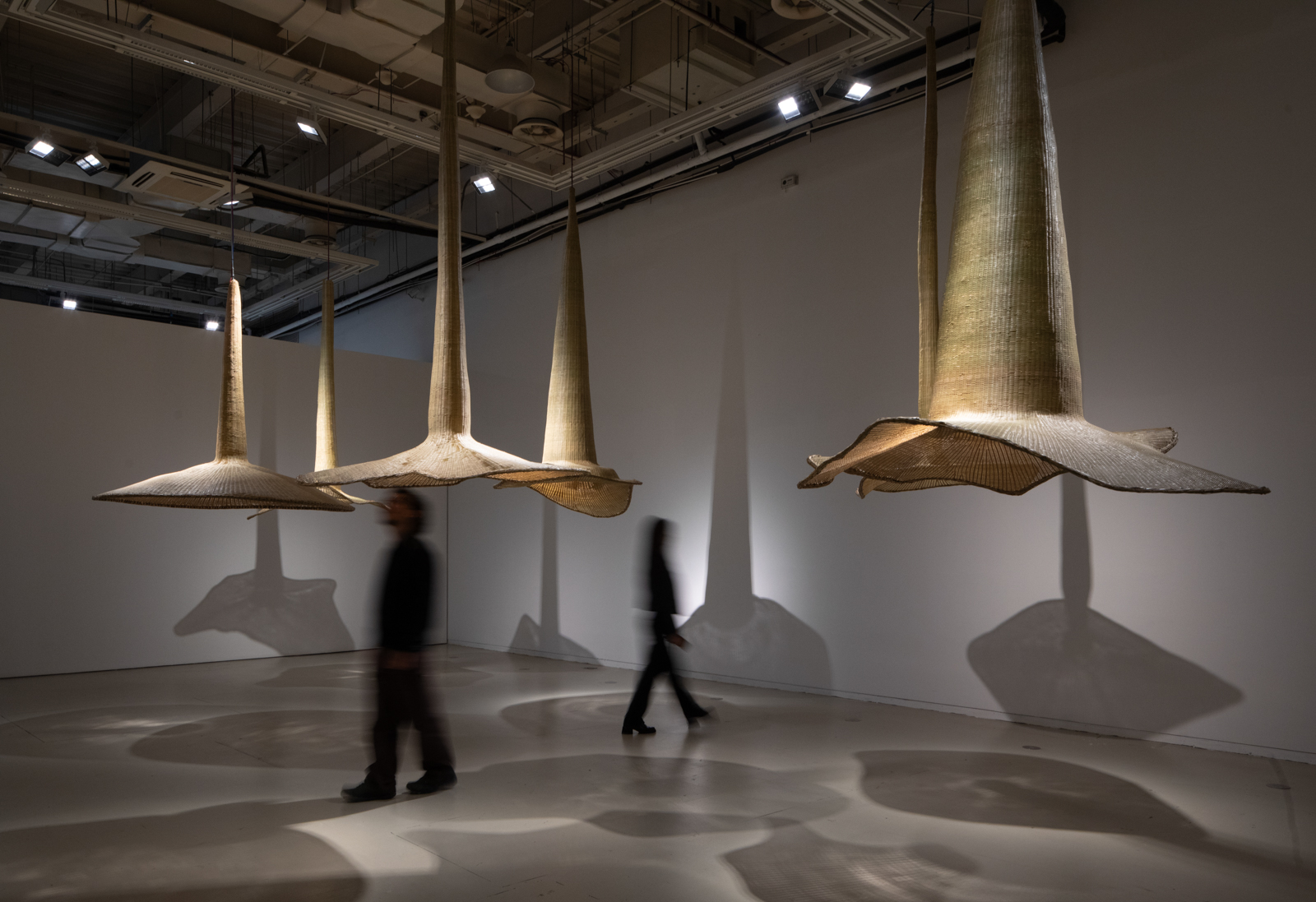
The 15th Shanghai Biennale centers on interactions between different life forms. The exhibition unfolds as an open landscape—a space to wander through rather than move along. Artworks seed throughout the Power Station of Art—anchored in the grand hall, threaded through circulation paths, tucked into enclosed rooms and gallery spaces. It is not a path to follow but a terrain to inhabit—where artworks, architecture, and visitors co-exist in shifting relations.
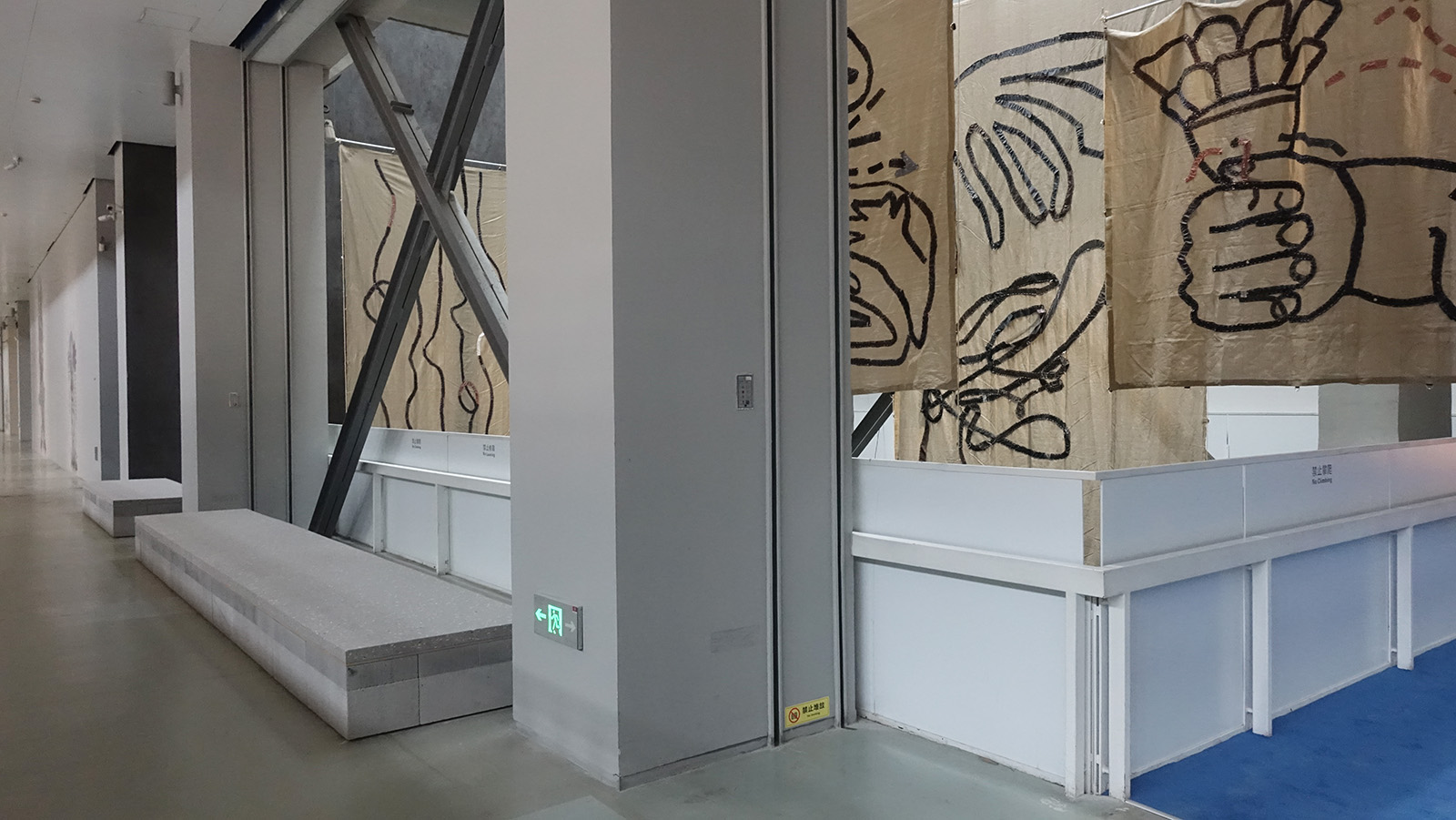
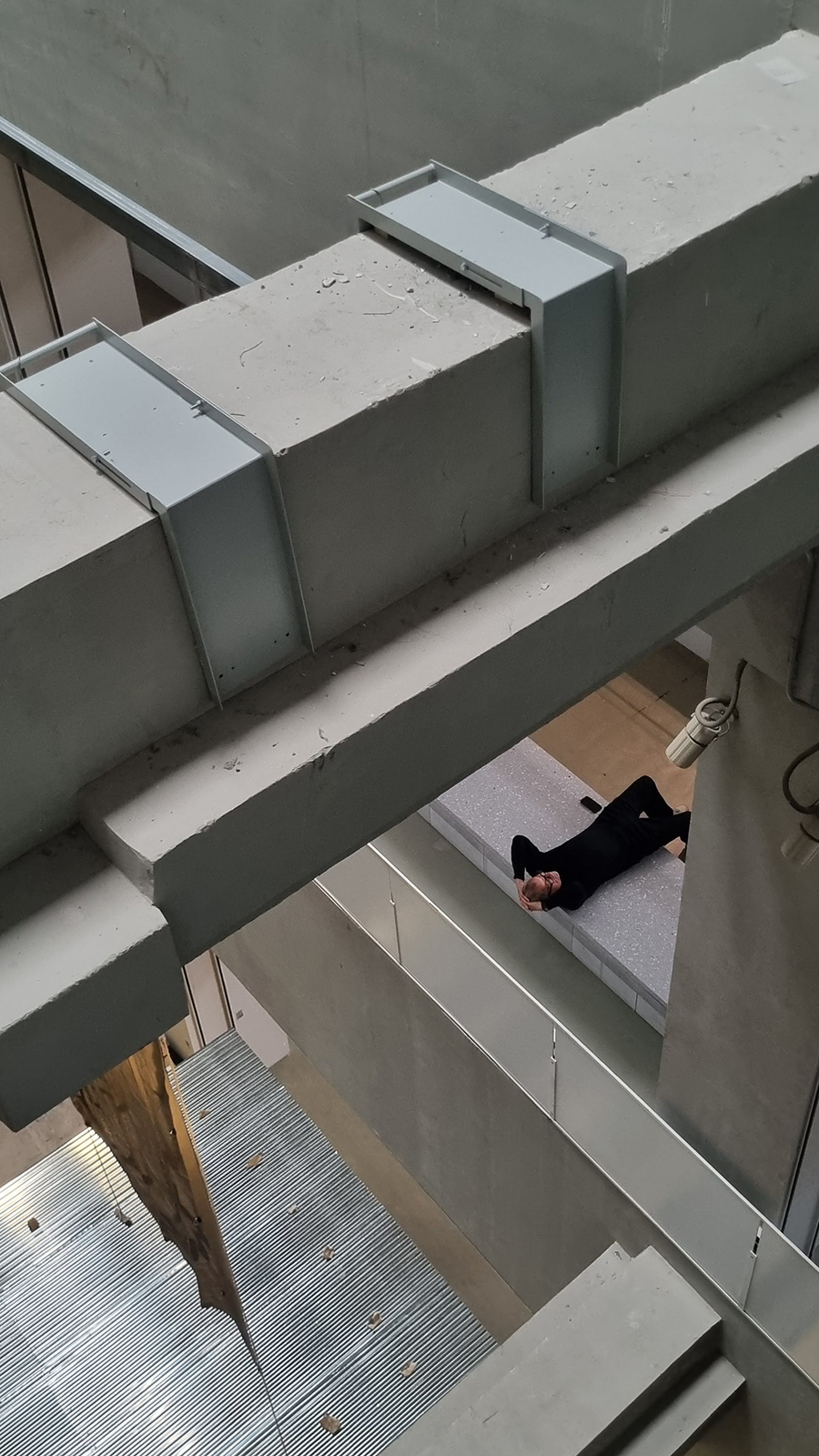
The scenography treats the building itself as landscape. Raw concrete blocks—the same industrial vocabulary as the architecture—form a man-made terrain throughout the space. Like rockwork in a garden that shapes how you see the scenery, these blocks offer different vantage points for viewing the artworks. They’re utilitarian and designed for a second life: after the exhibition, they can be upcycled rather than discarded.
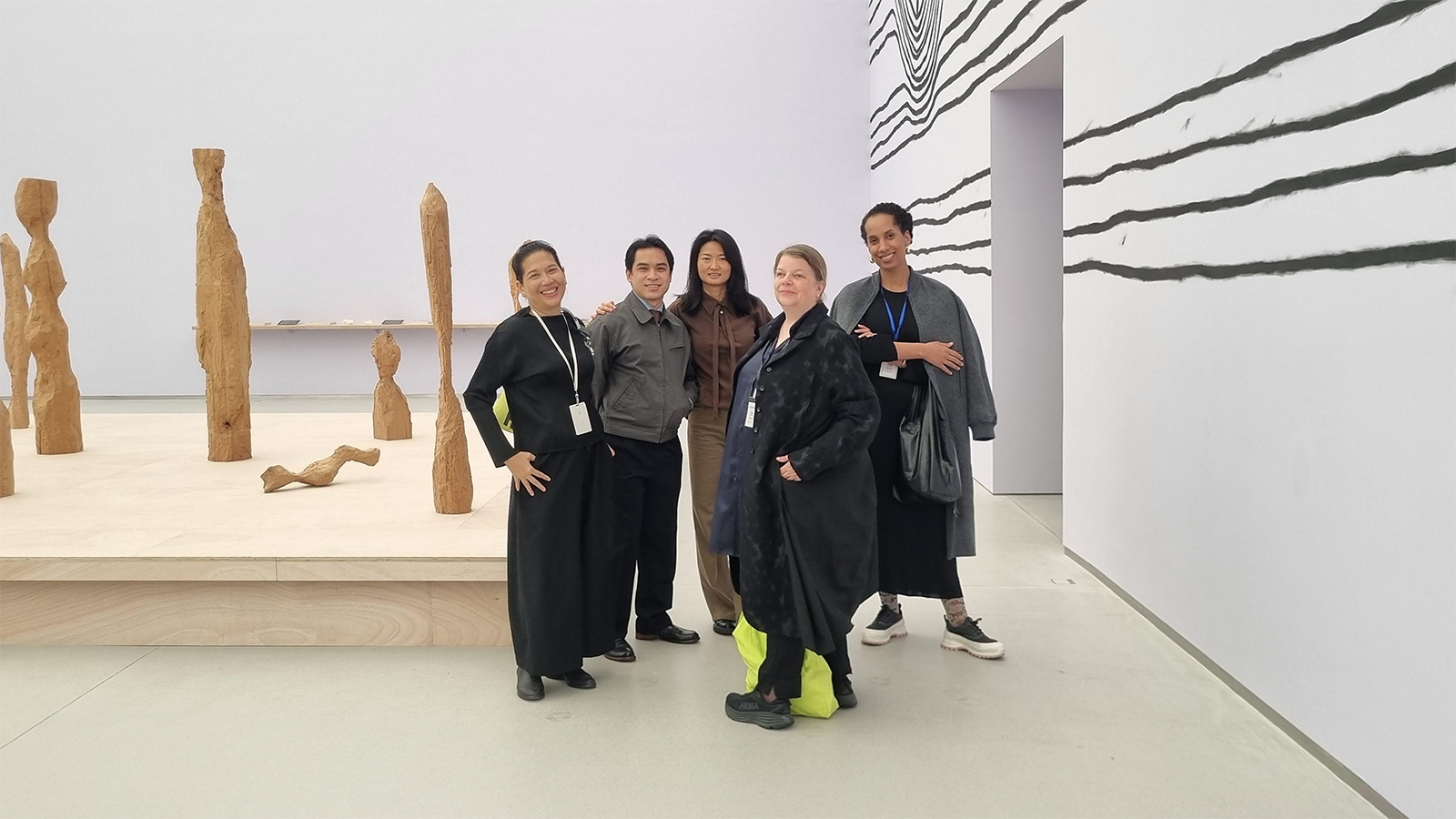
The design takes its cue from gardens—not as decoration, but as spatial principle. Like a Chinese scholar garden or Japanese stroll garden, the exhibition reveals itself progressively. As you move through, sightlines shift and new compositions emerge. Enclosed rooms offer moments of immersion, a different quality of attention. There's no prescribed route, only invitation. The exhibition offers moments to wander, to stop, not to rush but to rest and reflect among others. Visitors become part of the ecology—another life form moving through and shaping the space. We trust visitors to find their own rhythm—generous enough to wander in, structured enough to discover. These pauses aren't interruptions but essential, acknowledging that attention deepens with time, that reflection happens in stillness as much as in movement.